Showing posts with label Review: Cookbook. Show all posts

Thursday, 22 March 2012

REVIEW: Ten Healthy Teas by Valerie B. Lull

Synopsis

Ten Healthy Teas introduces you to the wonderful world of tea, which has many natural health benefits as well as being a beloved part of social ritual, and a comforting way to take a moment for yourself in a busy day. The information and recipes in this book are designed for those who want to explore the world of tea, but who might not have a lot of time to invest. Simple, clear, engaging information provides you with the inspiration to take your own journey into the delights of tea. Whether you prefer traditional black tea or herbal infusions, Ten Healthy Teas is an indispensable guide to healthy, enjoyable tea-drinking.


About the Author

Valerie B. Lull is currently studying herbalism with the American College of Health Sciences. She has always had a passion for staying healthy, and for the health benefits of teas and the various ways they can be prepared. Her passion for tea started in childhood, when she experienced a traditional-style teatime with her Canadian relatives.


My Thoughts

I'm a tea lover. I often drink hot tea in lieu of coffee or soda, and have been known to use tea to stave off cravings for sweets. I use peppermint tea to ease my unsettled stomach. I also have some experience with herbs, tinctures, aromatherapy, and the like. I spent a couple of years absorbing everything I could get on it back in my late 20s. I even made my own tea bag mixtures (using tea bags that were sealed shut with an iron!) and my own ginger capsules that I used for motion sickness when riding the ferry to Seattle. But now, a dozen years later, I am trying to get back to basics-- healthy eating, exercise, natural medicine. So I agreed to take a look at this book.

I've picked up quite a bit of knowledge in my personal studies, but one new one for me was Garlic Tea. While I am quite familiar with the medicinal properties of garlic, I never even considered making a tea out of it!

I'd also never heard before that peppermint tea can affect male fertility. At my age and in my single-state, that isn't really a concern, but good to know!

I also was pretty unfamiliar with Goldenseal. I'm sure I studied it "back in my day", but couldn't have told you today what you should use it to treat. Come to find out, it treats just about everything! Native Americans used Goldenseal extensively.

Which reminds me of a story that I wrote about on my other blog Heather's Eden:

I was working in the management office at an adult community, and we'd had a complaint from a resident about air potatoes behind her house (air potatoes are an invasive plant down here in South Florida). I checked out the situation, and the resident sent me back to my office with a few of the potatoes in hand.

Upon my return, I did a little research and confirmed that the air potato is in the yam family as I suspected. "I knew it!" I exclaimed to our 75-year-old receptionist Ruth Ann. "I knew this was in the yam family! You know, I believe that young Native American girls would use yams as birth control."

Ruth's eyes flew open as she looked at me in horror and she asked with great trepidation, "How did they use them?"

"They made a tea from them, I think," I replied.

"Oh! Thank God!" Putting her hand on her chest she looked at me with great relief. "I saw that potato in your hand, and when you said that they used them for birth control, I had this horrible vision in my head and thought, 'Oh, those poor girls!'" she exclaimed as she put her head down on the desk.

I loved Ruthie! She often made me laugh!

But I digress...

The book is organized into ten write-ups about a special ingredient to be used for teas "that are good for you". Each write-up explains how the tea is used, what it treats, any precautions or guidelines, recipes and "Tea Tips" like:
People often do not think of raspberries and lemons as herbs, but an herb can be any plant. Very often, weeds turn out to be valuable herbs. Actually, a weed is any plant that is in a place where a person does not want it!
Here is a recipe for Garlic Tea that I may have to give a try the next time I feel a cold coming on:

Garlic Tea III

3 garlic cloves, peeled and slightly crushed
1 bag lemon tea or 1 tsp lemon juice, whichever is desired
1 cup boiling water
Honey or stevia

Put ingredients in a cup and steep as long as desired. Add honey or sugar to taste.

My final word: This book is a good introduction into the use of herbs for the beginner just starting out. Teas are easy to make. Just a cup of water in a microwave and a tea bag is all that is needed to reap the health benefits that herbs have to offer.


My Rating: 7 out of 10 

Disclaimer:

I received a copy of this book to review from the author, in exchange for my honest opinion. I was not financially compensated in any way, and the opinions expressed are my own and based on my observations while reading this novel.

Saturday, 10 September 2011

REVIEW: The Vegetarian Bible by Publications International Staff

Synopsis

Whether you are a long-time vegetarian or vegan, or you just want to add more meatless meals to your diet, The Vegetarian Bible can help you in the kitchen. The 256-page cookbook offers more than 130 recipes that provide flavor, variety, and satisfaction without meat. Here is a closer look at the various sections in The Vegetarian Bible:

• Soups. Includes recipes for Zesty Vegetarian Chili, Oven-Roasted Beet Soup with Orange Cream, and White Bean and Escarole Soup

• Pasta and Noodles. Includes recipes for Cheese Ravioli with Wild Mushroom Sauce, Tofu Rigatoni Casserole, and Three-Pepper Fettuccine

• Grains and Legumes. Includes recipes for Barley and Swiss Chard Skillet Casserole, Lentil Stew over Couscous and Barley, and Bean and Corn Frittata

• Additional chapters for salad and sandwich recipes, and party and special occasion recipes, including light and lively party dishes like tortes, hummus dishes, and wheat gluten skewers

The Vegetarian Bible starts with a 24-page introduction to vegetarian cooking. A color photograph of the completed dish accompanies most of the recipes.


My Thoughts

This book begins by talking about vegetarianism: what it is, the different variations (ovo-lacto), how it's gone mainstream.Then there is a list of pantry ingredients you should keep on hand in a vegetarian kitchen:
  • Asian noodles: rice noodles, soba
  • Bulgur wheat
  • Cornmeal
  • Lentils
  • Pasta
  • Rice: long grain, brown, basmati, jasmine
  • tomatoes: canned whole and diced
  • Beans: a variety of canned or dried
  • Chickpeas
  • Dried mushrooms
  • Oils: extra virgin olive oil or vegetable oil
  • Quinoa
  • soy sauce
  • Vegetable broth
The book then discusses some special concerns to vegetarians, and how to ensure that they get the nutrients they need that may be difficult to obtain when not taking in animal products. This is followed by info on keeping produce fresh, how to store produce and for how long, an introduction to less common produce, grains and beans, and an intro to soy.

Then come the recipes. There's super soups like White Bean & Escarole Soup and French Lentil Soup. "Small Plate" dishes like Veggie-Stuffed Portobello Mushrooms and Spinach Souffle. "Asian Influence" entrees like Buddha's Delight and Thai Seitan Stir-Fry. Pasta dishes including Lasagna Florentine with Provolone & Portobello Mushrooms and Cheese Ravioli with Wild Mushroom Sauce. Good grains like Barley & Swiss Chard Skillet Casserole and Wheat Berry Apple Salad. "Hot & Hearty" dishes like Eggplant Parmigiana and 7-Layer Meatless Tortilla Pie. "Salads & Sandwiches" including Portobello Provolone Panini and Quinoa & Mango Salad. "Party Perfect" delights like Eggplant Crepes with Roasted Tomato Sauce and Barbecue Seitan Skewers.

Here is a "Party Perfect" recipe for Layered Mexican-Style Casserole:

2 cans (about 15 ounces each) hominy, drained*
1 can (about 15 ounces) black beans, rinsed and drained
1 can (about 14 ounces) diced tomatoes with garlic, basil and oregano
1 cup thick and chunky salsa
1 can (6 ounces) tomato paste
1/2 tsp ground cumin
3 (9-inch) flour tortillas
2 cups (8 ounces) shredded Monterey Jack Cheese
1/4 cup black olives

*Hominy is corn that has been treated to remove the germ and hull. It can be found with the canned vegetables or beans in most supermarkets.

Slow Cooker Directions
  1.  Prepare foil handles (see below). Spray slow cooker with nonstick cooking spray.
  2. Combine hominy, beans, tomatoes, salsa, tomato paste and cumin in large bowl.
  3. Press 1 tortilla in bottom of slow cook. (Edges of tortilla may turn up slightly.) Top with one third of hominy mixture and one third of cheese. Repeat layers. Top with remaining tortilla and hominy mixture; set aside remaining cheese.
  4. Cover; cook on LOW 6-8 hours. Sprinkle with remaining cheese and olives. Cover; let stand 5 minutes. Pull out tortilla stack with foil handles.
 Makes 6 servings

Foil Handles:  Tear off three (18x2-inch) strips of heavy-duty foil or use regular foil folded to double thickness. Crisscross foil strips in spoke design and place into slow cooker to make lifting of tortilla stack easier.

I love pictures in cookbooks, and this one has a picture for nearly every recipe in it. Simple recipes with simple ingredients, many of which I would normally have on hand in my pantry. This is a decent cookbook, and a good addition to the vegetarian kitchen.


My Rating: 7 out of 10 

Friday, 9 September 2011

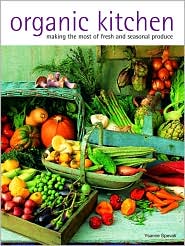
REVIEW: Organic Kitchen: making the most of fresh and seasonal products by Ysanne Spevack

From the back of the book:
  • Over 140 irresistible recipes that make the most of seasonal cooking, with soups and salads, tempting main courses and superb desserts.
  • Featuring a comprehensive survey of organic ingredients, from fabulous fruit and vegetables to tender meat and poultry, hearty breads and handy pantry items
  • A practical and straightforward guide to understanding the issues surrounding organically produced food and drink

About the Author

Ysanne Spevack is a leading light in the international organic movement. A writer and broadcaster, she has chaired organic food festivals and debates, and is the editor of an online organic website magazine.

My Thoughts

We live in a time of consciousness, and many more people are trying to eat organic produce and are challenging themselves to eat locally produced food. What I love about this book is that it groups recipes by season, assisting striving locavores in eating well while eating local.

The book begins with an introduction to organic food, expounding on things like "Agrochemical Farming" (prevalent farming using pesticides), uses for hemp, and the benefits of going organic.

It then moves into the "Organic Kitchen" and covers where to get organic produce, different storage and preparation methods, and farming methods used in our meat industry and with fish farming.

The book then shows you how to build your organic pantry with things like natural sweeteners as opposed to refined sugars.

The cookbook then has recipes broken up by seasons. Each recipe includes a beautiful photograph of the completed dish, as well as one or more photos of the preparation.

Spring leaves me yearning for Fillets of Sea Bream in Filo Dough, Seared Scallops with Chive Sauce on Leek and Carrot Rice, and Citrus and Caramel Custards. Summer has me dreaming of Zucchini Fritters with Pistou, Tabbouleh, and Watermelon Granita. Fall has me hankering for Roasted Garlic and Squash Soup, Red Onion and Mushroom Tartlets with Goat Cheese, and Sticky Pear Pudding. And winter has me wanting to wrap myself in the comfort of Winter Farmhouse Soup, Peppers Filled with Spiced Vegetables, and Spicy Pumpkin and Orange Bombe. (You may note that I don't list any meat or poultry dishes. That is because I am a pescatarian, but the cookbook does have plenty of both!)

The recipes are rounded out by those for "Sauces, Salsas, Chutneys, and Breads" with recipes for things like Onion Sauce, Peanut Sauce, Garlic Mayonnaise, and Cheese and Onion Cornbread.

The cookbook ends with a Glossary and Suppliers and Information Sources.

Here is a recipe for Onion Sauce, which reminds me of the vegetarian Mushroom Gravy that I made last Thanksgiving, which was delicious!

Onion Sauce
Serves 4

3 tbs olive oil
1 lb onions, halved and thinly sliced
3 tbs all-purpose or whole-wheat flour
1 2/3-2 cups vegetable stock
1 fresh thyme sprig
2 tsp dark soy sauce
sea salt and ground black pepper
  1. Put the oil in a small, heavy saucepan and heat gently. Add the onions and fry, stirring occasionally, for 15-20 minutes, until the onions are soft and beginning to brown.
  2. Increase the heat slightly and cook for another 20-30 minutes, stirring occasionally, until the onions are a dark, golden brown.
  3. Stir in the flour, then cook for a few minutes, stirring all the time. Gradually stir in 1 2/3 cups of the hot stock. Simmer, stirring, for a few minutes, until thickened, adding a little more stock if the gravy is too thick.
  4. Add the thyme, season with salt and pepper, then cook very slowly, stirring frequently, for 10-15 minutes.
  5. Stir in the soy sauce and a little more seasoning, if necessary. Add a little more stock if the gravy is too thick, remove the thyme, and serve immediately.
I thought this was a lovely little cookbook, which I picked up on clearance at Barnes and Noble for just a few bucks.

My Rating: 7 out of 10